
Apicoectomy
When infection cannot be predictably treated with conventional root canal therapy or retreatment, endodontic surgery may be recommended. During an apicoectomy, the infected tissue and tip of the root are removed, and the end of the root is sealed to prevent reinfection. This procedure can often preserve a natural tooth that might otherwise require extraction.
-
The first step is to profoundly numb the tooth, which is achieved by placing a local anesthetic into the gum next to the tooth. The anesthetic not only numbs the tooth but it also reduces bleeding in the area to provide a dry surgical site.
-
Following the numbing of the tooth, an incision is made at the gumline. A flap of gum tissue is reflected to expose the bone at the base of the root. A small hole is prepared in the bone to access the tip of the root.
-
After the root end has been accessed, a bur is used to remove the tip of the root by a few millimeters. The existing root filling is removed from the tip of the root and a new filling is placed within that preparation.
-
Once the root end has been sealed, the flap is replaced to its original position and secured with sutures. The patient will return in about a week to have the sutures removed.
How is an Apicoectomy performed?
Learn how endodontists perform surgery to treat an abscess or infection and save your tooth.
After treatment
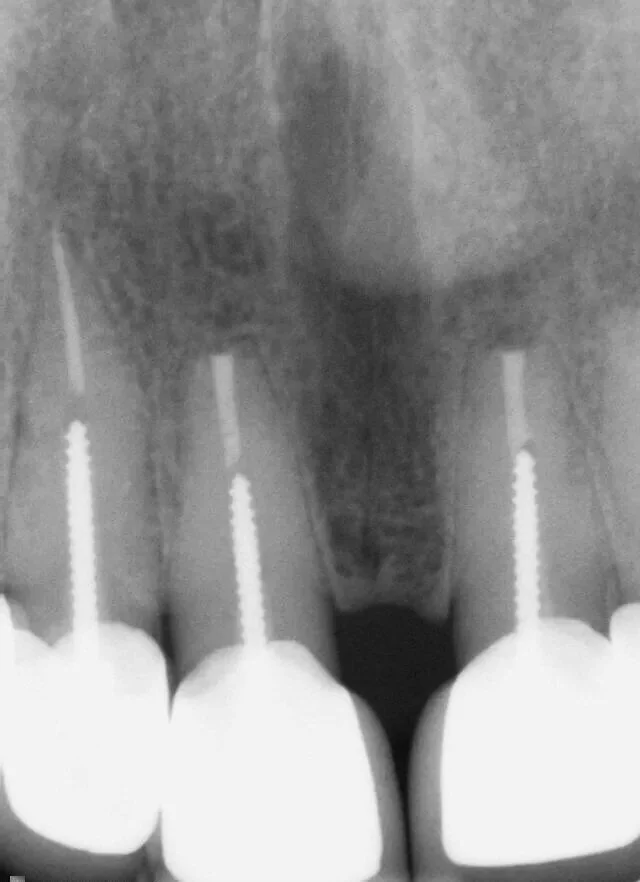
Some tenderness, swelling, or mild bruising is normal after an apicoectomy and usually improves over the first several days. The gum tissue generally heals within a few weeks, while the bone around the root continues to heal gradually over several months.
Follow-Up
Even when a tooth feels completely comfortable after an apicoectomy, healing beneath the surface continues for months. Follow-up examinations and X-rays allow us to evaluate the bone and tissues around the root end and confirm that the area is responding appropriately to treatment.